The itch
Judging fuel in the field is learned slowly, one job at a time. The rules were written down in the fuel quality rubric, but nothing let technicians practise them before it counted.
What I built
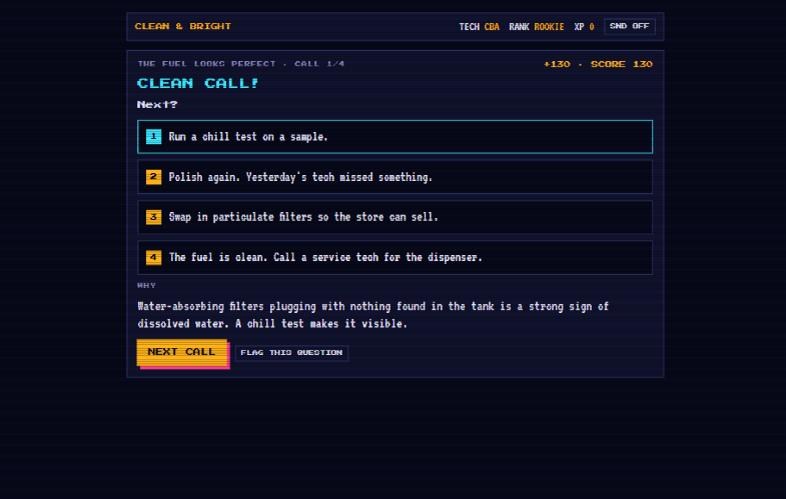
A game where you work through realistic field situations. Each one stops at a decision point: what do you call, and what do you do next? Good calls earn XP, XP earns ranks, and there's a leaderboard to compete on.
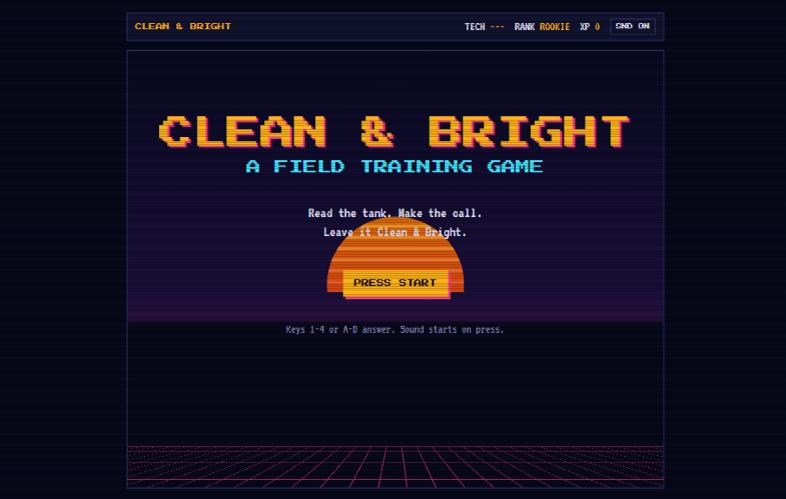
It's one HTML file, so it runs on any phone or laptop with nothing to install.
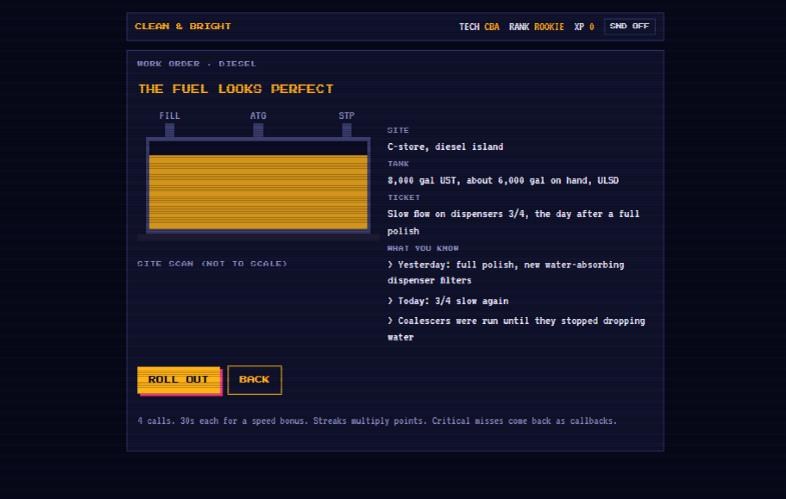
Each job starts with a work order: the site, the tank, the ticket, and what you know before you arrive.
Then come the calls, against the clock, with a bonus for speed and streaks.
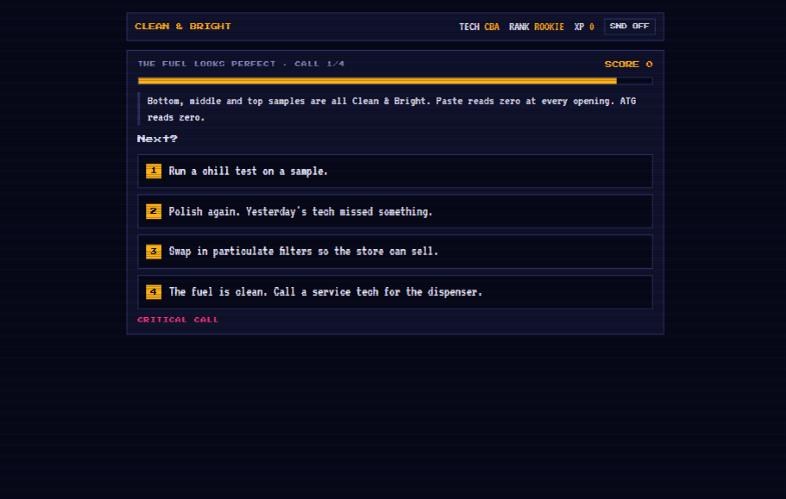
It's still in development: five scenarios are playable, with more on the way.
How AI helped
Claude built the game, but the content discipline is the interesting bit:
- Scenarios come from the rubric. Each decision point maps to a rule, so the game teaches the same answer the other tools give.
- Text first, game second. Every scenario is tested as plain text before it goes into the game, which catches confusing wording cheaply.
- A weekly review pulls new scenario ideas from rubric work and flags any that conflict with a rule.
What it gave back
Not measured yet. It's not in technicians' hands. The aim is judgment built faster, and I'll report a number once there is one.
What I'd do differently
I'd write the scenario bank before the game engine. The engine was the fun part, but the scenarios are the product, and they're the slow part.