The itch
I wanted to learn how a real game gets made, end to end: game feel, difficulty, saving scores, and testing something that moves sixty times a second. I also wanted to see how far a single file could go.
What I built
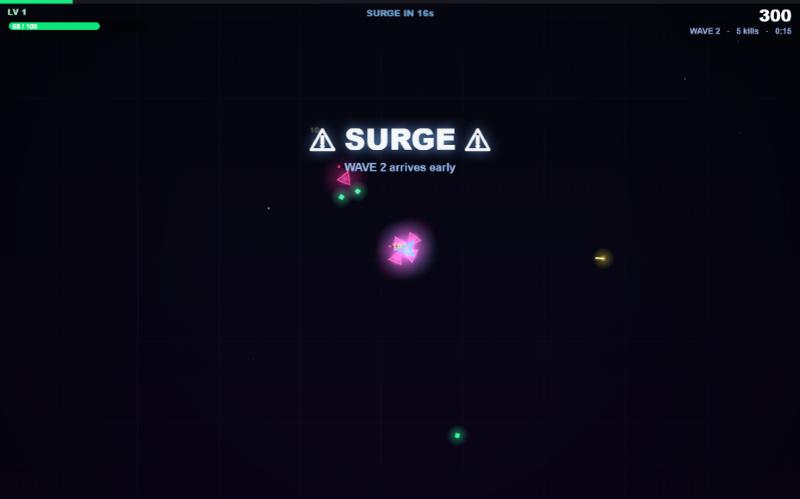
Nova Surge is a twin-stick arena game. You move with WASD, aim with the mouse, and dash out of trouble. On a phone, your left thumb moves, your right thumb aims and fires, and a button dashes.
- Everything is code: vector graphics, synthesized audio, and zero image or sound files. The whole game is one HTML page.
- Waves that build: elites every third wave, phasing walls shaped like falling blocks, a surge timer that piles on the next wave if you stall, and three bosses (the Warden, the Hydra and the Phantom).
- A global top 10 with old-school three-letter initials, plus classic sci-fi GIF moments when you clear a boss.
How AI helped
Claude wrote the code, but never loose. Every version started as a locked spec: a short list of acceptance criteria written before any code, like "damage scales 6% per wave" or "the game stays one self-contained file". Nothing counted as done until tests proved each line of the spec.
That discipline is the real takeaway. The game now has 46 automated tests: 34 that play it in a real browser and 12 on the score server. When a later version retuned the difficulty, the tests made sure nothing else moved.
What it gave back
Fun, mostly. It also taught me the spec-first, test-gated way of building that I now use on every serious tool, at work and at home.
What I'd do differently
Version 3 exists because version 2 got boring. Runs ended because you got bored, not because you were in danger. I'd write "how should a run feel at wave 10?" into the very first spec instead of discovering it later. Touch controls came last, too. I'd plan for phones from day one, since that's where most people will open the link.
Links
- Play Nova Surge (keyboard and mouse, or touch)